
When the Bank Stops Requiring Coverage
You paid off the car three years ago. The lender release arrived, you filed it, and nothing about your insurance changed. Your carrier never called to ask whether you wanted to adjust coverage now that collision and comprehensive became optional instead of mandatory. The premium kept renewing at the same rate, covering a vehicle whose replacement value dropped while the policy cost stayed flat.
Most retirees in Newark discover this gap only when reviewing statements with an adult child or when a neighbor mentions dropping full coverage after paying off their sedan. The coverage you carry today may reflect the loan requirement from five years ago, not the driving pattern and asset exposure you face now. That mismatch is the friction this article resolves.
Compare rates from carriers that specialize in senior drivers
Mature driver discounts, low-mileage rates, and coverage reviews — see what you're actually eligible for.
Get Your Free QuoteNJ Bodily Injury Minimum Per Person
$15,000
New Jersey's minimum liability limits are $15,000 per person, $30,000 per accident, and $5,000 property damage. A single at-fault injury claim can exceed these floors in under three minutes of emergency-room care, exposing retirement assets the state minimum will not shield.
N.J.S.A. 39:6A (New Jersey Automobile Insurance Cost Reduction Act)
What Full Coverage Actually Protects
Full coverage means liability insurance plus collision and comprehensive. Liability pays the other driver's bills when you're at fault. Collision repairs your car after a crash regardless of fault. Comprehensive covers theft, weather damage, vandalism, and animal strikes. On a financed vehicle, the lender requires all three because their collateral must stay insured.
Once the loan is satisfied, collision and comprehensive become judgment calls. Liability remains mandatory under New Jersey law and protects your savings, your home equity, and any other asset a plaintiff can reach after an at-fault accident. The question is not whether you need insurance; it is whether paying to repair or replace your own aging vehicle still makes financial sense when you could self-insure that risk and redirect the premium savings into higher liability limits.
The blocker: Medicare pays your medical bills after a crash, but it will not pay the other driver's bills when you caused the accident, leaving retirement assets exposed if liability limits are too low.
Coverage That Earns Its Cost After Payoff

Liability limits above the state minimum protect the assets you spent decades building. New Jersey requires only $15,000 per person and $30,000 per accident for bodily injury. A single moderate injury claim—broken bones, concussion, overnight hospital stay—exceeds $15,000 before the ambulance bill arrives. If you carry $100,000 or $300,000 in home equity, retirement accounts, or taxable savings, those assets become reachable in a lawsuit the moment your liability limit is exhausted. Increasing liability from the state minimum to $100,000/$300,000 costs far less than the collision premium on an older vehicle and shields everything a court can attach.
Uninsured motorist coverage pays your medical bills and lost income when the at-fault driver carries no insurance or flees the scene. New Jersey requires UM/UIM, but the required minimum matches the liability floor—$15,000 per person. Medicare covers your hospital care, but it does not replace lost income if you still work part-time, and it does not cover the gap between your out-of-pocket maximum and the at-fault driver's inadequate policy. Raising UM/UIM to match your liability limit closes that exposure for a modest premium add.
Related Articles
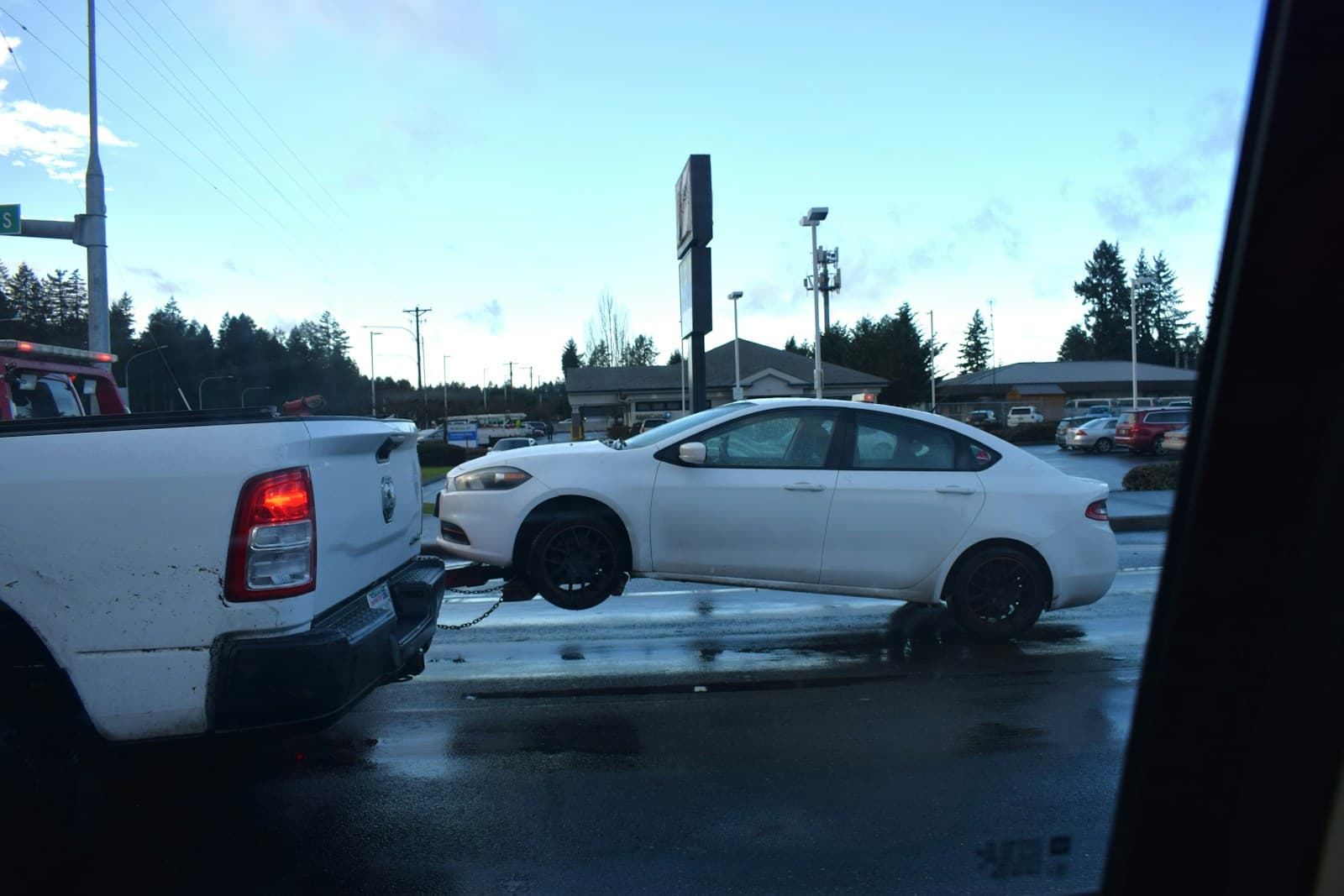




When Collision No Longer Justifies the Premium
Collision coverage pays to repair your car after a crash, minus your deductible, regardless of fault. On a paid-off vehicle, the maximum claim you can collect is the car's actual cash value the day before the accident. If your 2015 sedan is worth $4,200 and your collision deductible is $500, the most the carrier will pay is $3,700. If your annual collision premium is $620, you are paying 17 percent of the car's value each year to insure a risk you could cover from savings.
The conventional threshold: when annual collision premium exceeds 10 percent of the vehicle's current value, self-insuring becomes the better financial decision for most households. For a retiree with an emergency fund, that threshold may be even lower. Dropping collision and comprehensive on a vehicle worth under $5,000 can reduce your annual premium by $800 to $1,400. Redirecting half that savings into higher liability limits and the other half into a dedicated vehicle-replacement fund builds long-term financial resilience without paying an insurer to cover a depreciating asset.
Two failure modes competing pages omit: first, some carriers will not issue a policy with liability-only coverage on a vehicle model year newer than a certain age threshold, forcing you to keep collision until the car crosses that line. Second, if you finance the next vehicle, the lender will require collision again from day one, so the premium savings window lasts only as long as you own the current car outright. Plan the replacement timing with that constraint in mind.
NJ Mature-Driver Discount Floor
5%
New Jersey requires every insurer to offer at least a 5 percent discount to drivers who complete a state-approved defensive driving course. The discount is age-neutral under N.J.A.C. 11:3-24.3, but retirees are the likeliest group to have the time to complete the course and claim the reduction. Carriers may exceed the 5 percent floor; ask each one what their filed rate is.
N.J.A.C. 11:3-24.3 (enabling statute N.J.S.A. 17:33B-44.1)
Medical Payments and PIP Under Medicare
New Jersey requires Personal Injury Protection (PIP) on every auto policy. PIP pays your medical bills and a portion of lost income after an accident, regardless of fault, up to your selected limit. Standard PIP options in New Jersey range from $15,000 to $250,000. Medical payments coverage (MedPay) is optional and works similarly, covering medical bills for you and your passengers without a fault determination.
If you are enrolled in Medicare, Medicare becomes your primary payer for accident-related medical care. PIP coordinates as secondary coverage, paying deductibles, co-pays, and services Medicare does not cover. For retirees whose out-of-pocket maximum under Medicare Advantage or a Medigap plan is capped at a known annual figure, selecting the minimum PIP limit—$15,000 in New Jersey—often provides adequate gap coverage without paying for redundant protection. MedPay becomes unnecessary when PIP and Medicare together cover the exposure. Verify your plan's out-of-pocket ceiling before your next renewal and adjust PIP to match that number rather than carrying the working-age default.
Comparing Carriers That Serve Retirees Well
Not every carrier writing in New Jersey treats low-mileage retirees the same. Some offer usage-based programs that discount premiums when annual mileage drops below a threshold; others price all policies as if you still commute 12,000 miles a year. Geico, Progressive, State Farm, and Nationwide all write in New Jersey and offer the state-mandated mature-driver-course discount. Geico and Progressive provide online quoting for liability-only and custom-limit comparisons. State Farm and Nationwide require agent contact but may offer bundling incentives if you also carry homeowners or umbrella coverage.
New Jersey Manufacturers and Amica serve the preferred-tier market and often price competitively for retirees with clean records and owned homes. Both require higher liability limits as a condition of writing the policy, which aligns well with asset-protection priorities but may feel restrictive if you want to price the state minimum first. When comparing, request quotes at $100,000/$300,000 liability, the state-minimum PIP, and no collision or comprehensive. Then ask each carrier what their filed mature-driver discount percentage is and whether they offer a low-mileage or pay-per-mile program for drivers under 7,500 annual miles.
Drop Collision, Raise Liability, Verify the Discount
Pull your current declaration page and your vehicle's actual cash value from a trusted valuation tool. If the car is worth under $5,000 and your annual collision premium exceeds $500, request a quote with collision and comprehensive removed and liability increased to $100,000/$300,000. Confirm the carrier applies the mature-driver discount—many require you to submit the course-completion certificate even if you told the agent you finished it. The certificate does not auto-populate; file it at renewal or the discount never appears. Compare that revised quote against at least two other carriers writing in Newark and verify each one's filed discount percentage and low-mileage program terms before deciding.